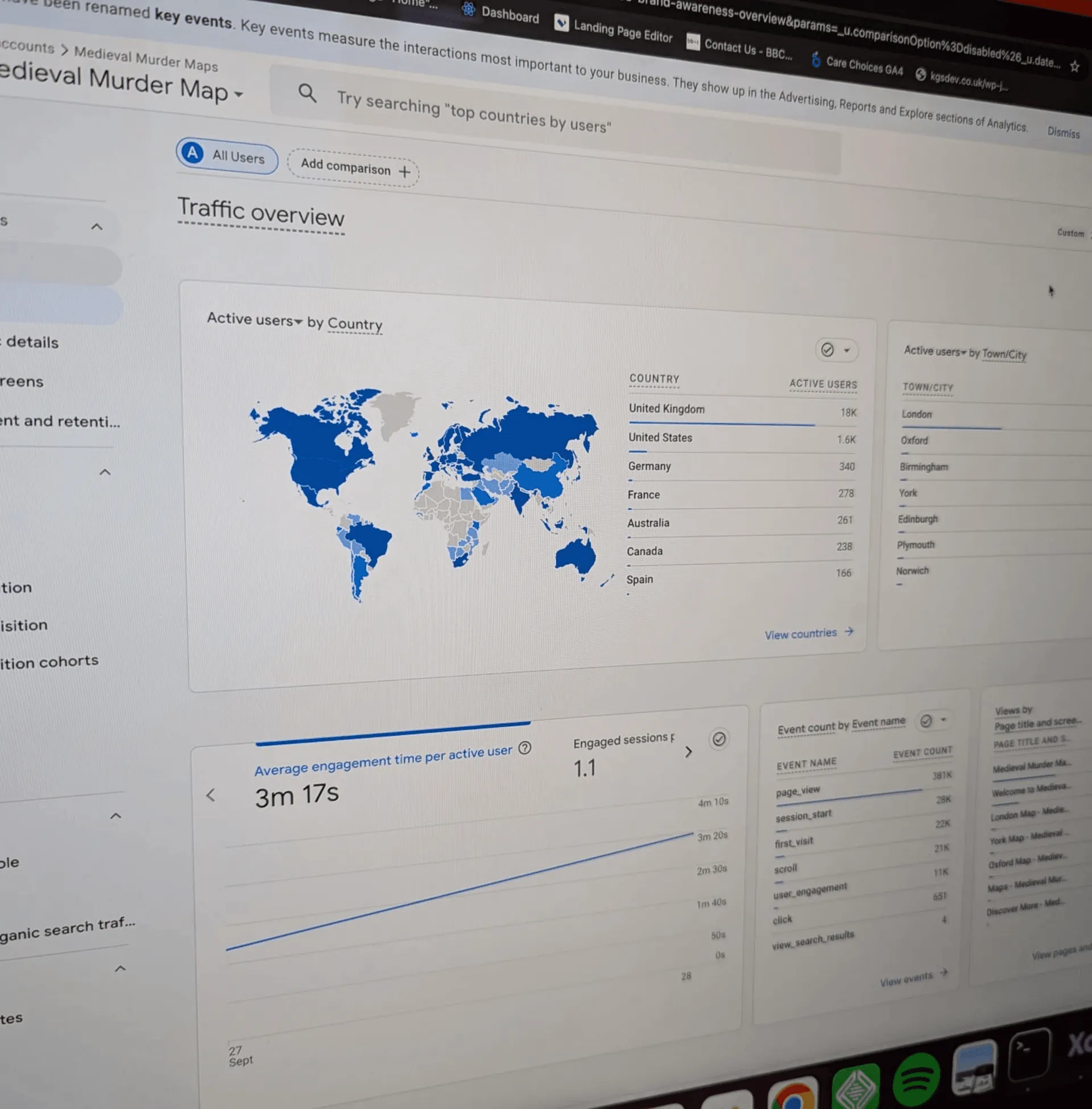
I attended BrightonSEO for the first time this year, which, was a brilliant opportunity to meet new people working in the industry and hear talks from experts. But my key takeaway from the event? AI and the impact it having on SEO.
Marketers and alike have been saying for years now that SEO is dead, but with the introduction and significant growth of AI, particularly the search functionality, will SEO still be as relevant as it was 20 years ago? Google itself has introduced a "AI Overview" for information based searches.
This article explores how AI is reshaping the world of search, from smarter search engines and AI-driven tools, to changes in search behaviour, voice search, content optimisation and user experience. I’ll share what I learnt at BrightonSEO and how these trends are shaping the future of SEO strategies.
With the changes to the search engines and popularity of AI searches, what is the future of SEO, how will strategies adapt and how can you stay ahead?
Search Engines are Smarter than Ever
Search engines are online tools that scan, index and organise information from across the web, helping users quickly find answers to their queries. In the late 1990s and early 2000s, early platforms like Ask Jeeves and AltaVista were popular, but their results were clunky and irrelevant, relying heavily on basic keyword matching.
Today’s smart engines are driven by sophisticated algorithms, machine learning, and natural language processing that can understand intent, context, and even conversational queries. With the introduction of the AI Overview on Google's results page and CoPilot supporting Bing Searches, the way users are searching and navigating the search engine results pages has changed. More information is being offered to the users while they are still on the results page, which is impacting the clicks on the top results, as found by Ahrefs (Ahrefs).
These changes aren't all negative for SEOs though, AI is helping to enhance the search engine results to better understand the intent of the user's search. Which means content that targets long-tail keywords can be better aligned with what users are actually looking for. As a result, there’s potential for increased visibility in AI-generated overviews and higher rankings in Google, especially when the content is genuinely useful and well-structured.
AI is Changing SEO in 2026, but how?
In recent years, artificial intelligence has been quietly revolutionising the way we approach SEO. AI-powered tools, such as Morningscore and Surfer SEO are now a cornerstone of modern search strategies, particularly when it comes to keyword research and content optimisation. Platforms are offering unparalleled insights into what search engines, and more importantly, users are really looking for.
Where once SEOs relied heavily on intuition and manual research, we now have tools that can predict search intent, analyse competitor content, and suggest real-time improvements. This shift has made SEO both more accessible and more competitive. If you're not embracing AI in your SEO toolkit, you're at serious risk of falling behind.
Google’s own search updates, such as BERT and MUM, have demonstrated a clear pivot towards understanding context and user intent, rather than just keywords. AI tools that mirror this focus give marketers a critical advantage in crafting content that resonates with both algorithms and audiences.
The introduction of Google's AI Overview has changed how websites appear on the search engine rankings, with the question and answers now taking precedence over the organic results. It is well documented that where position one sits on the search engine results page is dropping, with Press Gazette finding that for general searches, it required a full scroll to reach the first organic result (Press Gazette)
Is Voice Search the Next Opportunity?
Voice search is nothing new, it has been around since the early 2010s with the introduction of Google's Voice Search and later, Apple's Siri. Today, around 20.5% of the population use voice activated searches, which equates to one in five people (Demand Sage).
But, if something has been around for over 10 years, how can it be a new opportunity? People are always looking to make their lives simpler, for finding answers to questions, to creating a shopping list without writing down every item, and because of this, businesses are having to re-consider how this can be integrated into their strategies.
As voice-activated technology becomes increasingly integrated into daily life, it’s having a profound impact on SEO strategies and content creation. For example, a local café could optimise for voice by adding conversational FAQs like “Where can I get the best flat white near me?” or by creating content that mirrors how people naturally ask questions aloud.
Voice searches tend to be more conversational, question-based, and locally focused, requiring marketers to shift their focus from short, keyword-heavy tactics to more natural, intent-driven content that mimics how people speak. Creating content that effectively targets long-tail keywords and conversational queries, reflecting speech patterns will support your voice search efforts.
AI And The User Experience Go Hand In Hand
AI is becoming a key player in how websites deliver exceptional user experiences. By tracking how visitors interact with a site, from the pages they linger on to the elements they ignore, AI tools can uncover patterns that might otherwise go unnoticed. This is the same technology Amazon uses to recommend products based on browsing and purchase behaviour. This data helps businesses refine layouts, navigation, and content placement to match real user behaviour, rather than relying solely on assumptions.
AI doesn’t just stop at observation; it can actively improve site performance, with data like bounce rate, dwell time and conversions. Predictive algorithms can anticipate user needs, recommend content in real-time, and even automate personalisation so each visitor receives a tailored journey. Combined with advanced monitoring, AI can quickly flag issues such as slow-loading pages, high bounce rates, or poor mobile rendering, enabling swift action before they harm conversions.
What You Can Do
- Utilise AI-powered analytics to identify trends in visitor behaviour, such as where drop-offs occur or which calls-to-action drive the most engagement.
- Optimise website speed by using AI tools to pinpoint performance bottlenecks, like large image files or inefficient code, and suggest fixes.
- Test and improve mobile usability by running AI-powered heatmaps and session recordings that reveal how users interact on different devices.
- Refine overall UX through A/B testing platforms with built-in machine learning, ensuring changes are based on statistically significant results rather than guesswork.
- Automate content delivery so that users see the most relevant pages, products, or resources based on their past interactions and predicted interests.
By combining AI’s analytical capabilities with strategic optimisation, brands can create websites that not only attract visitors but keep them engaged, delivering a seamless experience across all touchpoints.
Content Creation And Optimisation With AI
Now, you may be thinking, I can just use AI to write several SEO articles targeting relevant keywords. While this could be implemented into an SEO strategy, it isn't recommended to put AI written content straight onto a website, without first reviewing and editing the content to ensure it is relevant and factually correct. Even AI itself says that it's not 100% correct. Using AI can pose risks of factual errors and plagiarism, so content should always be proofread before posting.
So how can AI be used to create impactful content relevant to your users searches?
AI is revolutionising content production by accelerating research, ideation, and first-draft writing. It can:
- Analyse SERPs and identify content gaps
- Generate topic clusters and semantic keyword suggestions
- Help structure outlines tailored to user intent
- Optimise content with internal links, schema suggestions and on-page SEO best practices
To effectively utilise AI in content writing, it should enhance human input, not replace it.
Google E-E-A-T (Experience, Expertise, Authoritativeness and Trustworthiness) is more important than ever in the content that is published on your website (Google). Generative AI can help produce volume and speed, but it can't replicate lived experience or nuanced industry knowledge. To meet Google’s quality standards and maintain long-term SEO value, content should be:
- Written or reviewed by subject matter experts
- Fact-checked and aligned with trustworthy sources
- Crafted with a clear understanding of audience needs and search intent
AI is a tool, not a replacement for human expertise. The best results come when you combine AI’s data-driven capabilities with your own insights, storytelling, and brand understanding.
Adapting SEO Strategies For The AI Era
As artificial intelligence continues to reshape the digital landscape, SEO strategies must evolve to remain effective and competitive, as they have done in the past. To stay ahead, digital marketers should embrace AI-driven tools that can streamline technical SEO tasks such as crawl analysis, site audits, internal linking, and implementation of changes. Platforms powered by machine learning can uncover insights at a larger scale, allowing SEO professionals to focus on strategy rather than repetitive tasks.
Equally important is a focus on user intent and personalisation. AI enables a deeper understanding of audience behaviour, empowering brands to deliver more relevant, targeted content experiences that match the evolving expectations of search users. This theme was echoed by Lily Rae, Keynote Speaker at BrightonSEO in April, in their insightful talk "The Lifecycle of SEO", where they charted the SEO journey from keyword stuffing to context-rich, AI-informed strategies (Amsive). As Lily highlighted, the future of SEO is not about gaming algorithms, but aligning more closely with what users truly seek, backed by the power of AI to make that process smarter and more efficient.
The Future of SEO
Whatever people will have you believe on LinkedIn, SEO isn't dead, it continues to evolve as it has done since the creation of the internet. But as we continue through 2025, and into 2026, what are the current and future search trends to consider in your strategy?
Growing Popularity in AI Search Engines
Recently, OpenAI announced they are releasing a web browser that will rival Google Chrome that will use AI, changing to overall way users browse the internet (Reuters). Google has also launched an AI Mode that crawls the search results to provide in-depth answers for users (Google). What could be the impact of these? Users are searching more long-tail questions, particularly in AI powered search engines to find specific answers. As such, marketers should implement specific and relevant long-tail keywords, particularly questions into their content, ensuring they are clearly and effectively answered. Bullet points can also make the content easier to digest for both AI bots and users.
E-Commerce SEO Strategies are Becoming more Popular
I recently took part in the Summer Of SEO by Freddie Chatt. This outlined how important it is to enhance e-commerce pages for the SERP to drive more users, and ultimately sales to a website.
From adding product schema into to the site, to writing relevant, keyword-rich product descriptions that help you rank better on the SERP, e-commerce SEO is a trend that marketers, especially those who work on e-commerce websites, should be adopting in 2025.
Utilising Content across Platforms
A key theme at BrightonSEO was the importance of creating and sharing content across multiple platforms, including social media. For example, after publishing a long-form blog, a YouTube video could be created going through the key points discussed, which can then be used for Shorts on the platform. This content can also be shared on Instagram, TikTok, Facebook and Reddit, highlighting how SEO has grown from being a search engine focused area of marketing. Using and sharing content this way can increase your overall outreach across platforms (Amsive).
For example, at Design Monkey, we utilise our blog content in LinkedIn and Instagram posts to highlight benefits, and make our audience aware of the services we offer.
Conclusion
- SEO is evolving rapidly, creating exciting new opportunities but also growing more complex.
- AI is now central to how search engines work and how users engage with content.
- Success goes beyond keywords and backlinks — it requires understanding user intent and creating genuinely valuable content.
- AI should support, not replace, strategic thinking.
- To future-proof your strategy:
- Embrace AI tools.
- Understand your audience deeply.
- Target long-tail keywords effectively.
- Distribute content across multiple platforms.
If you're unsure where to begin or how to integrate AI into your SEO without risking performance, the best step is to seek expert guidance. At Design Monkey, we’re here to help you stay ahead of the curve and craft strategies that evolve with the search landscape – not against it.